The full loop, automated
From customer signal to shipped feature to measured outcome. Here's how it works.
AI hasn't just sped up building. It has collapsed the wall between deciding what to build and building it.
PMs and designers are now creating PRs. Engineers have always made product calls every commit - now the tools should acknowledge it. AI agents ship code with zero context about why. The tools haven't caught up. Product tools assume someone writes a spec. Engineering tools assume someone hands you a task.
Quack Stack sits in between. One context layer, every surface, every role.
Continuous context ingestion
Market and competitor signals
The discovery pipeline monitors your market around the clock - surfacing trends, competitor moves, and emerging opportunities before your team would find them manually.
Customer voice from every channel
Support conversations from Zendesk, Intercom, and HelpScout flow in automatically - alongside JustCall calls and the shared Slack channels you opt in. Real customer language, real pain points, real feature requests - not filtered through a summary.
Interview transcripts, analysed instantly
Paste a customer interview transcript and get structured analysis in seconds - key quotes, kill criteria signals, engagement scores, and latent signals your team might have missed.
Your team's own thinking
Meeting notes from Granola, documents from Notion, Slack conversations with Quack Stack - the reasoning behind your decisions is captured, not just the decisions themselves.
Direct feedback from your customers
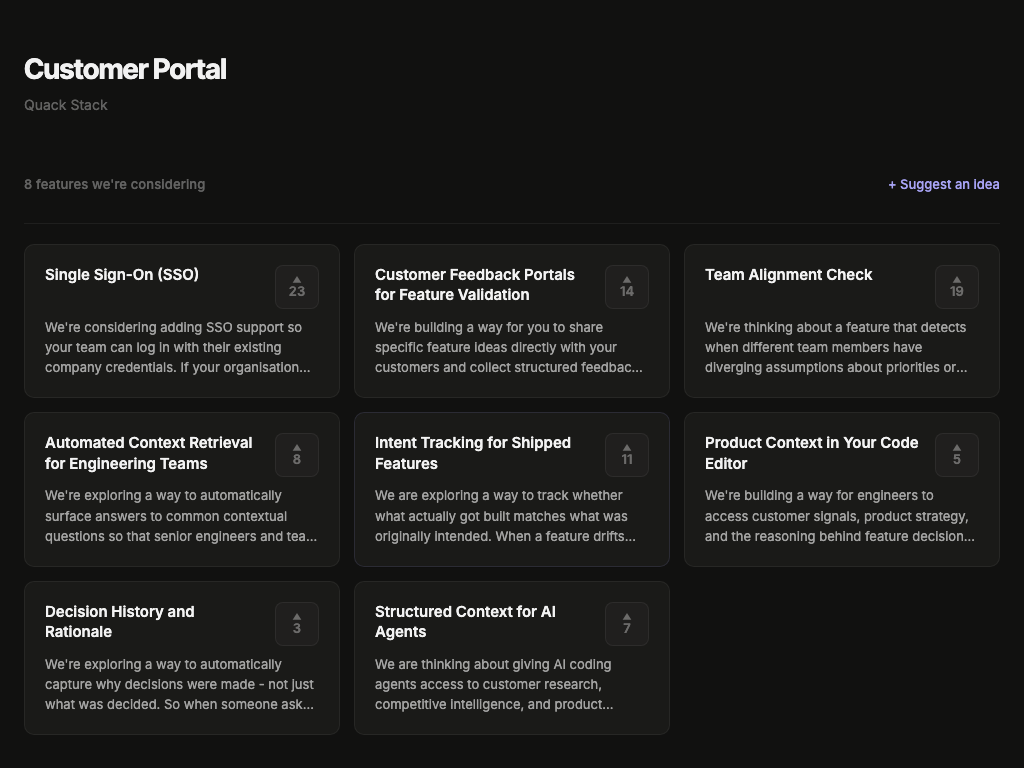
Share specific opportunities with your customers through a public feedback portal. They vote on what matters most, suggest new ideas, and tell you what they need - in their own words. Another voice alongside support tickets and interviews, but this one's proactive.
From noise to "what to build"
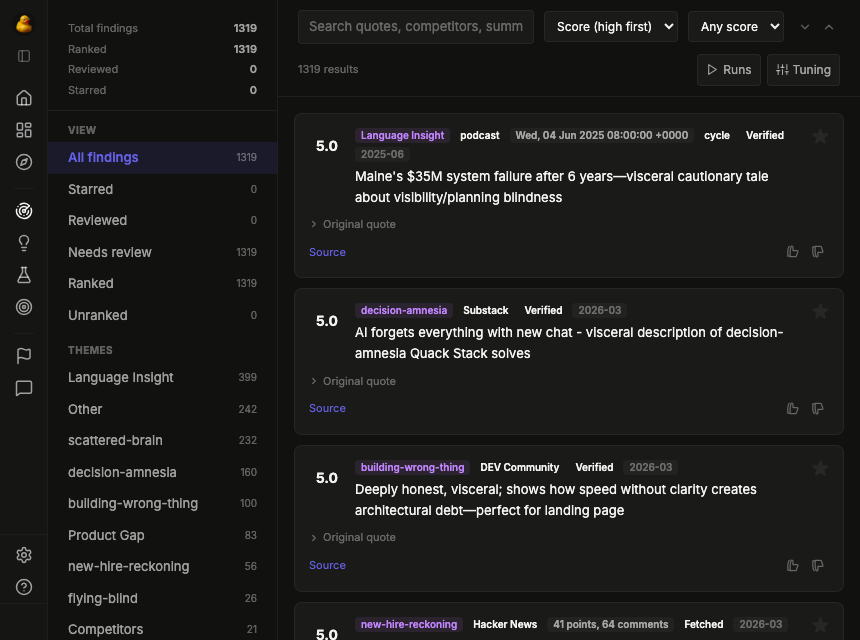
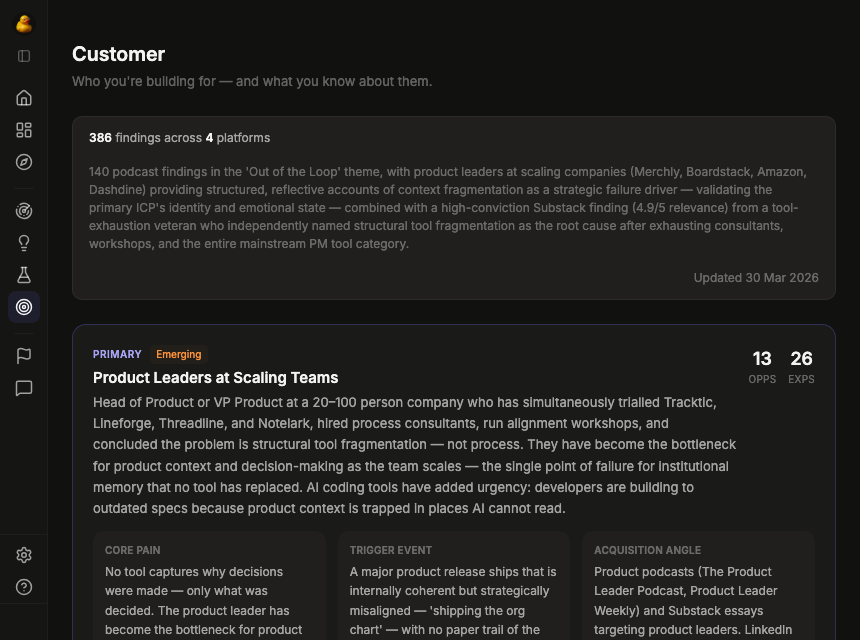
Signals become intelligence
Raw findings are verified, scored, and synthesized into a coherent narrative. Not a dashboard of numbers - a living picture of what's happening in your market and why it matters.
Strategy docs that stay current
ICP, positioning, competitor analysis, messaging - generated from evidence and updated nightly. Your strategy reflects reality, not last quarter's offsite.
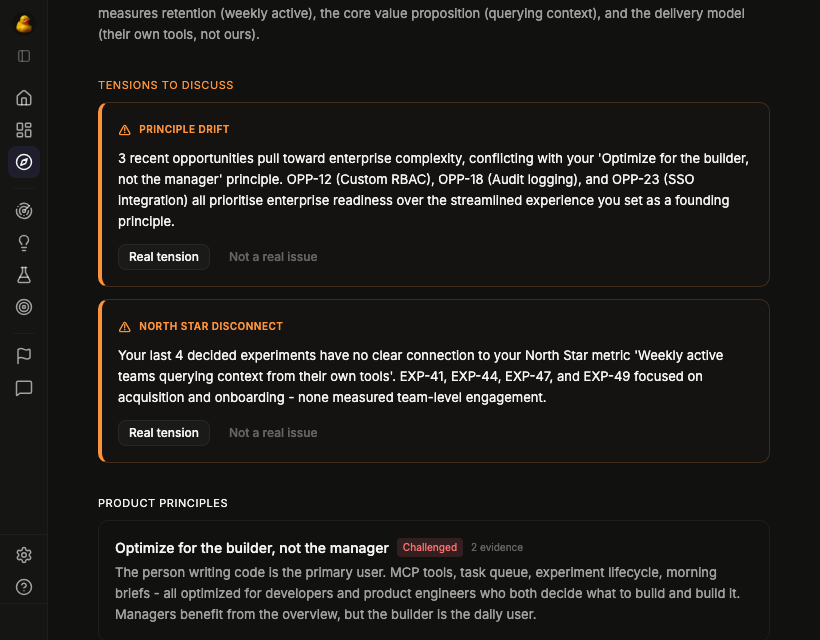
Your strategy argues with your data
When new evidence contradicts your product vision or principles, the system flags it as a tension. A pricing signal that clashes with your 'simplicity first' principle. A market shift that pulls away from your North Star. You see the conflict before you ship the wrong thing.
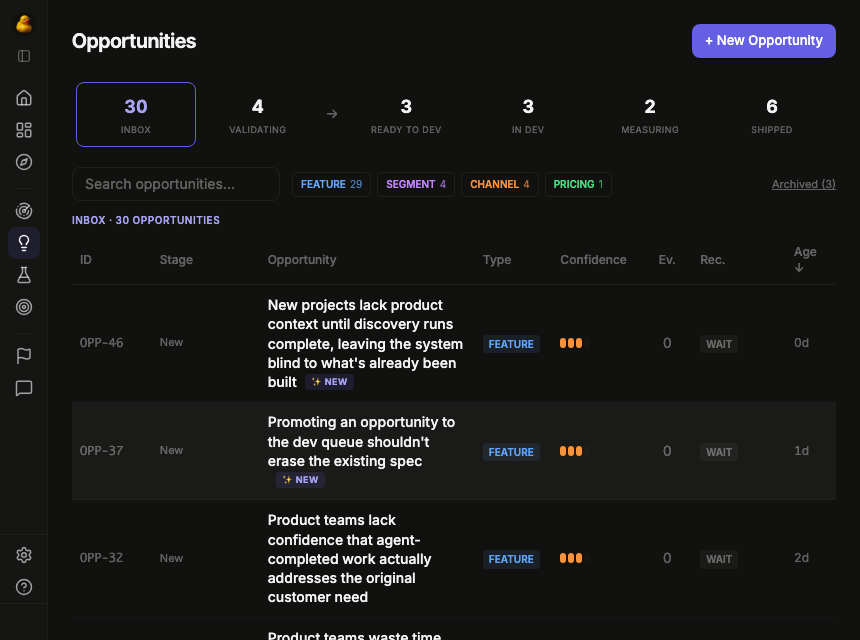
Opportunities ranked by evidence
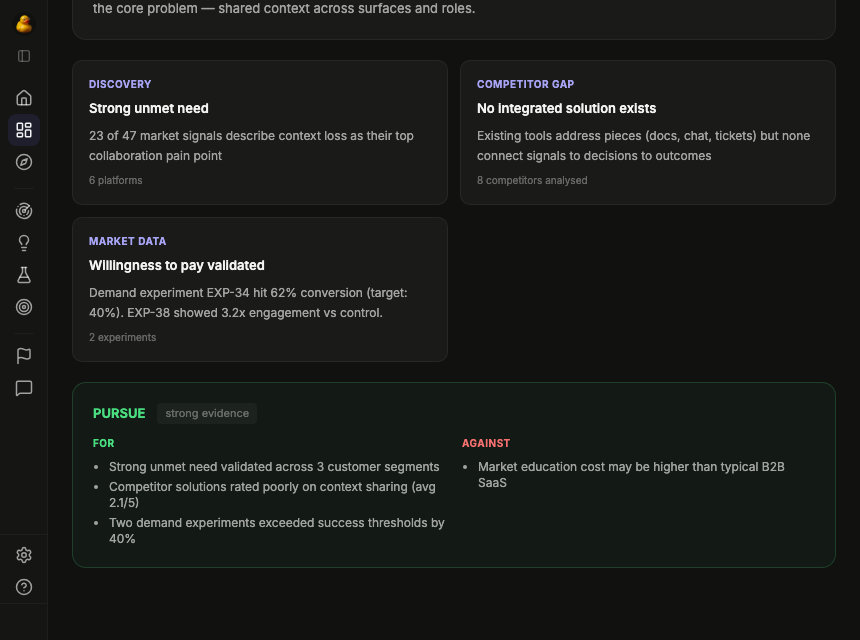
The system identifies opportunities across features, segments, channels, and pricing. Each one traces back to specific customer language, market data, or team reasoning.
Expert agents pressure-test every opportunity
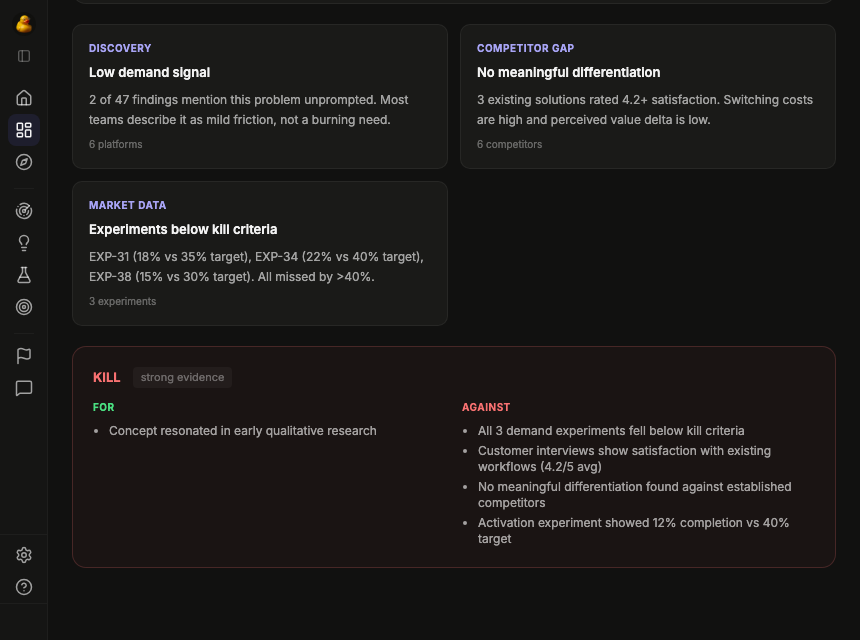
A panel of domain experts - discovery, growth, positioning, pricing - and synthetic users modelled on your ICP segments review each opportunity from multiple angles. Built-in second opinions, before you commit resources.
Validate before you build
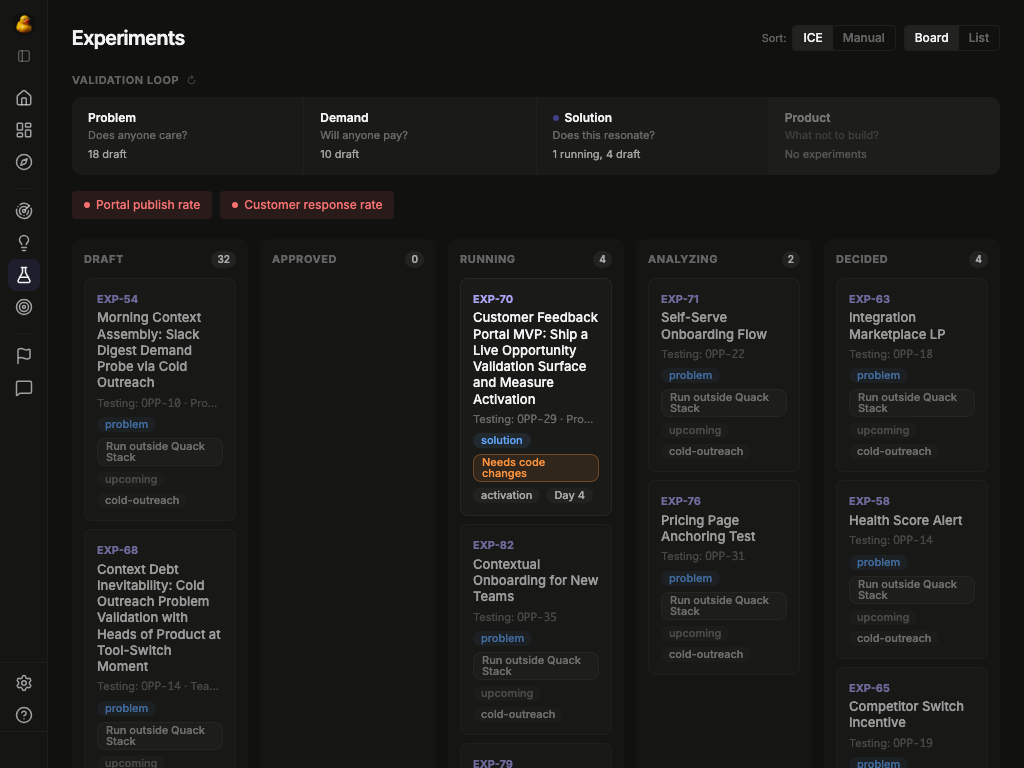
Experiments with real hypotheses
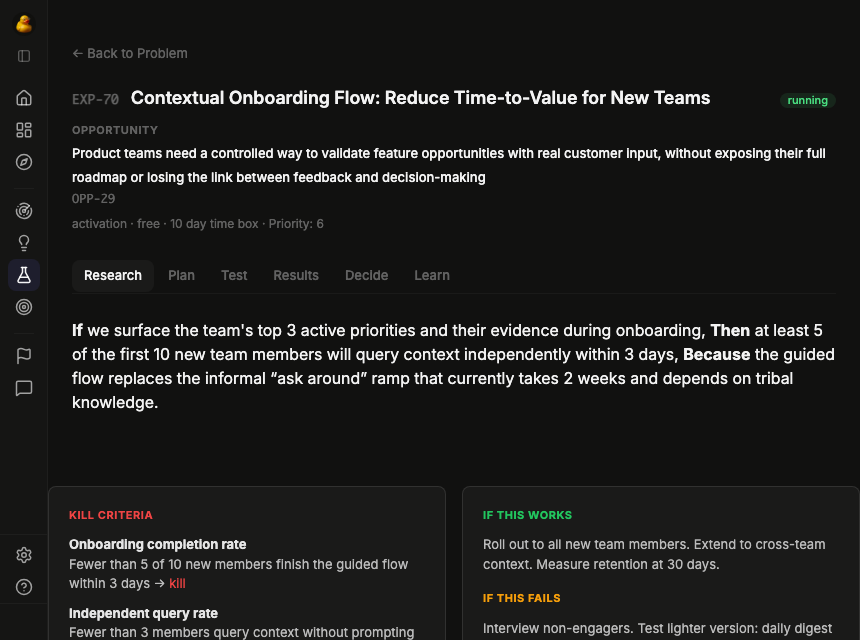
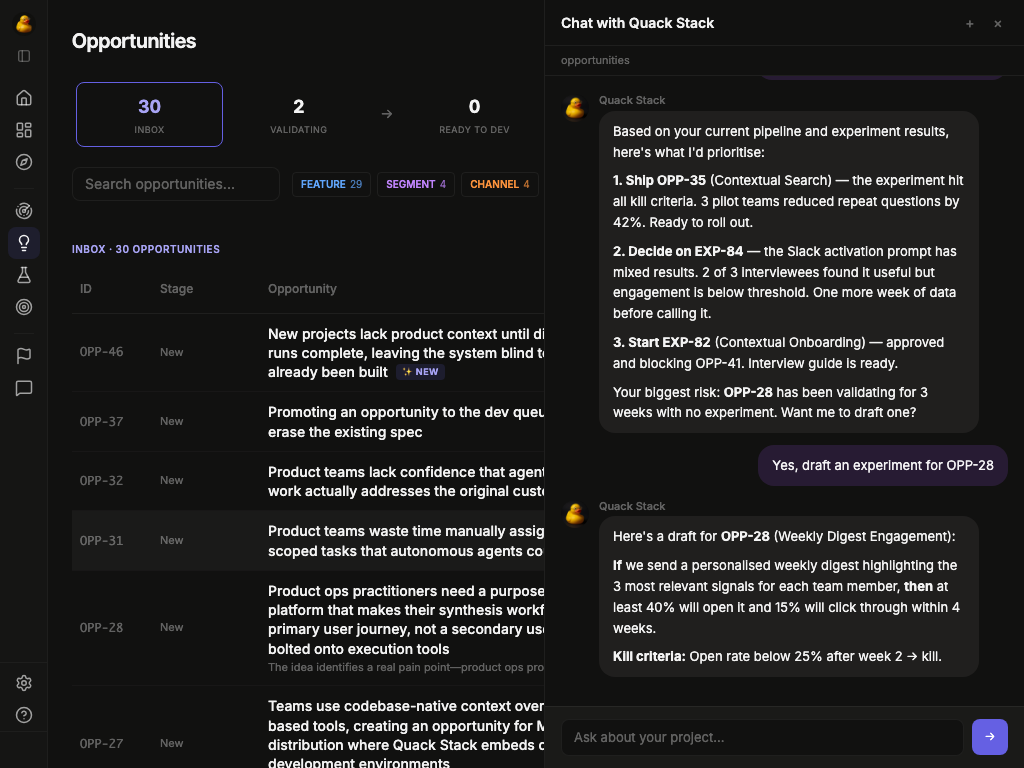
Each opportunity gets a concrete experiment with an if/then/because hypothesis, kill criteria, and a measurement plan. No more "let's just build it and see."
Interview guides that write themselves
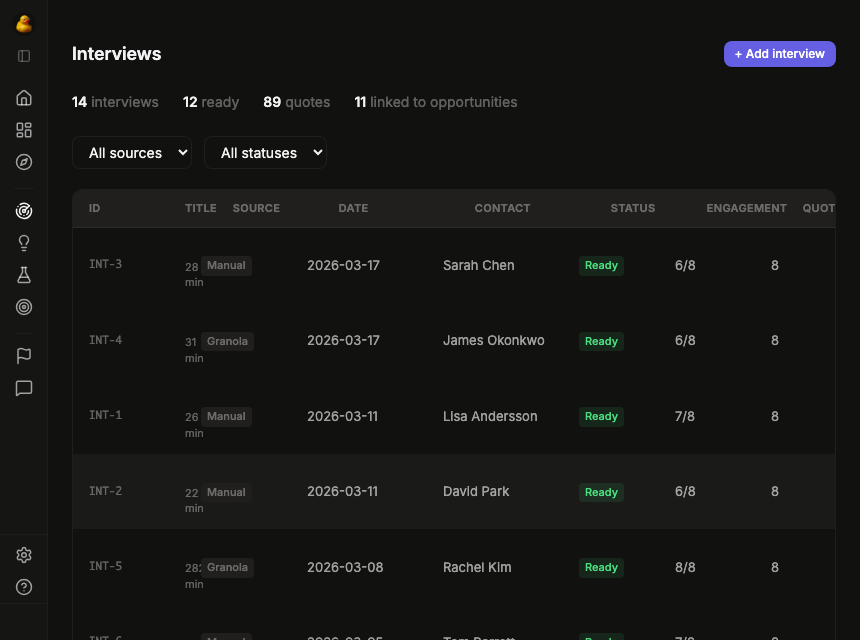
For validation experiments, Quack Stack generates interview guides with questions mapped to your hypotheses and kill criteria. Run the interviews, paste the transcripts, get structured results.
Kill criteria that actually kill
Set thresholds before you start. As evidence comes in - from interviews, prototypes, or market signals - the system tracks whether you've hit your bar or missed it. No post-hoc rationalisation.
Customer votes that count
When customers vote on an opportunity in your feedback portal, the confidence score increases. Real demand signal from real people, feeding directly into your prioritisation - without running a full experiment.
Context where you already work
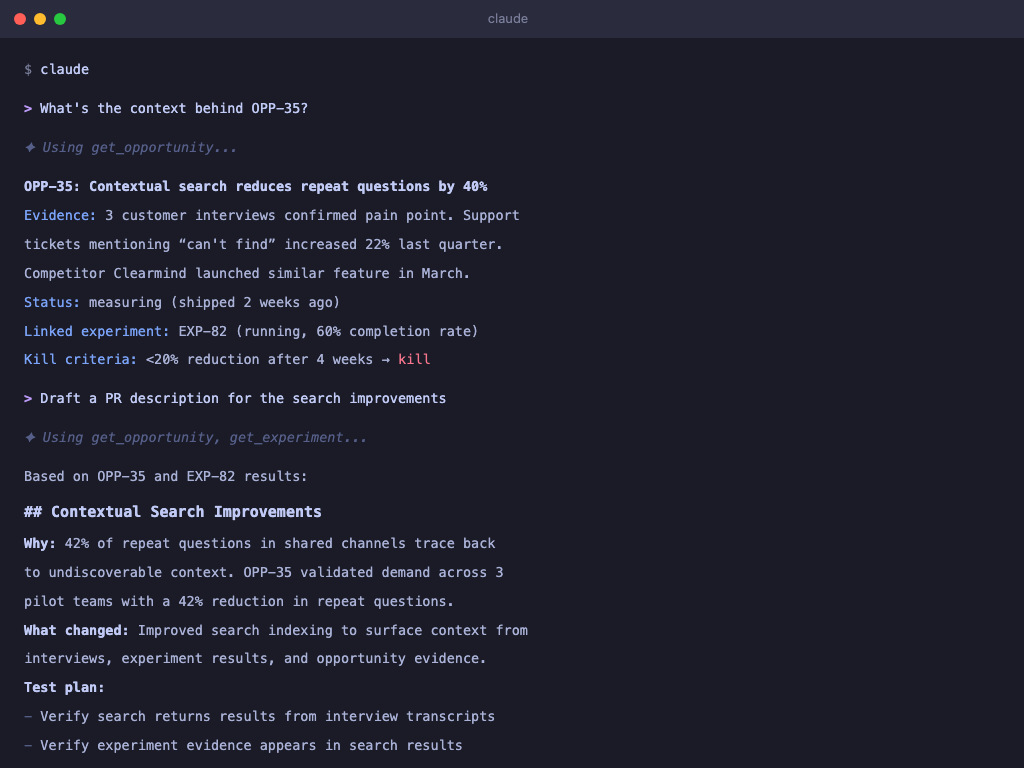
Product intelligence in your IDE
Engineers make product decisions every commit. Query customer signals, opportunity evidence, and the "why" behind any task directly from Claude, ChatGPT, or Cursor. No context switch, no waiting for a PM to respond.
Quack Stack in Slack
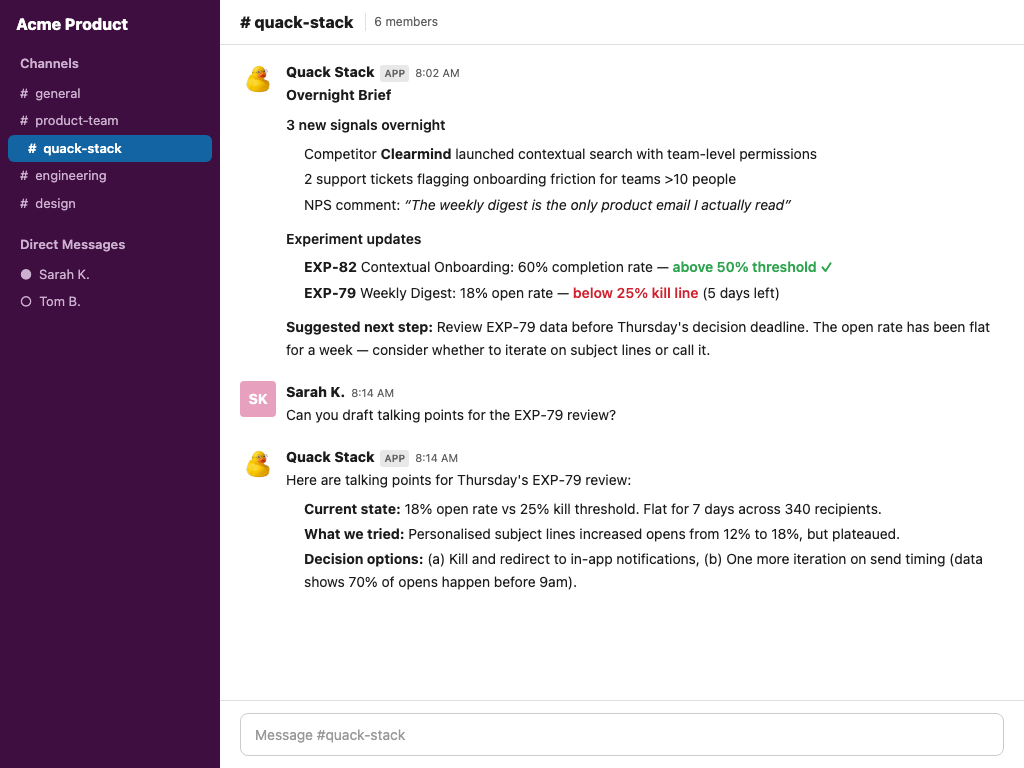
Morning briefs, proactive signals, and answers to "what should I work on next?" - right where the conversation already is. Product people and engineers get the same evidence, in the same place.
One command away in any terminal
Install @quack-stack/cli and run quack from your shell, Claude Code, Codex, Cursor, or Aider. No MCP server to configure, no browser tab to switch to. OAuth device login, then the same product context as everywhere else.
Full context for your AI agents
When agents build, they pull customer signals, the hypothesis, and success criteria through the same connection that powers your chat tools. They stop building cold. Every AI-generated PR starts from real evidence instead of a vague prompt.
Know if it worked
Shipped features enter measurement automatically
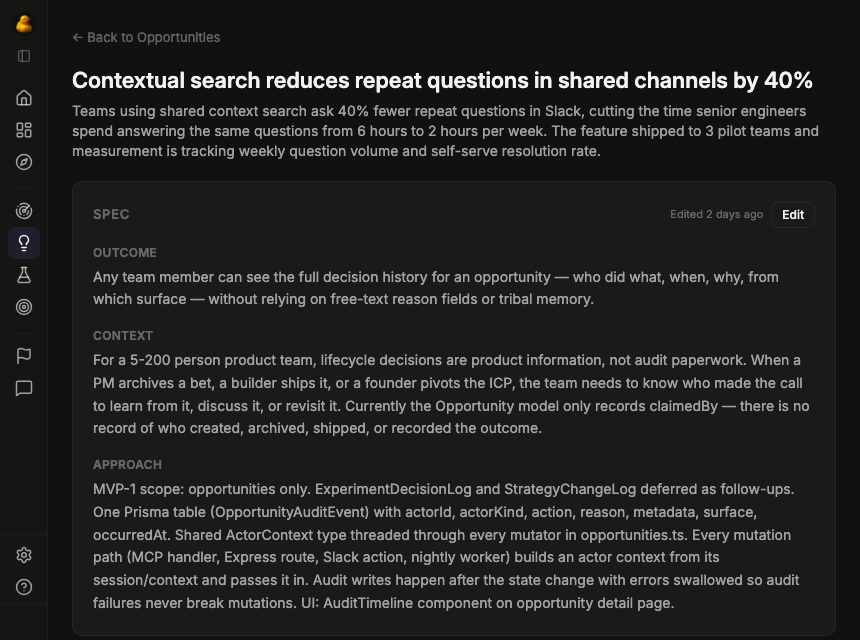
When something ships, it enters measurement automatically. Your team can also start tracking anything by telling their AI tool to measure it - one message, and it's being watched. No dashboards to configure, no metrics to define upfront.
Structured outcomes, not vibes
Every measurement has a clear outcome: positive, improving, negative, or guardrail breach. The system tells you what happened and routes you to the right next step.
The loop closes
Outcomes feed back into priorities. Validated experiments strengthen the evidence for related opportunities. Failed experiments sharpen your understanding of the market. Intelligence compounds.